
From Field Data to Proof: How Doktar Technologies Closes Agriculture’s Digital Infrastructure Gap
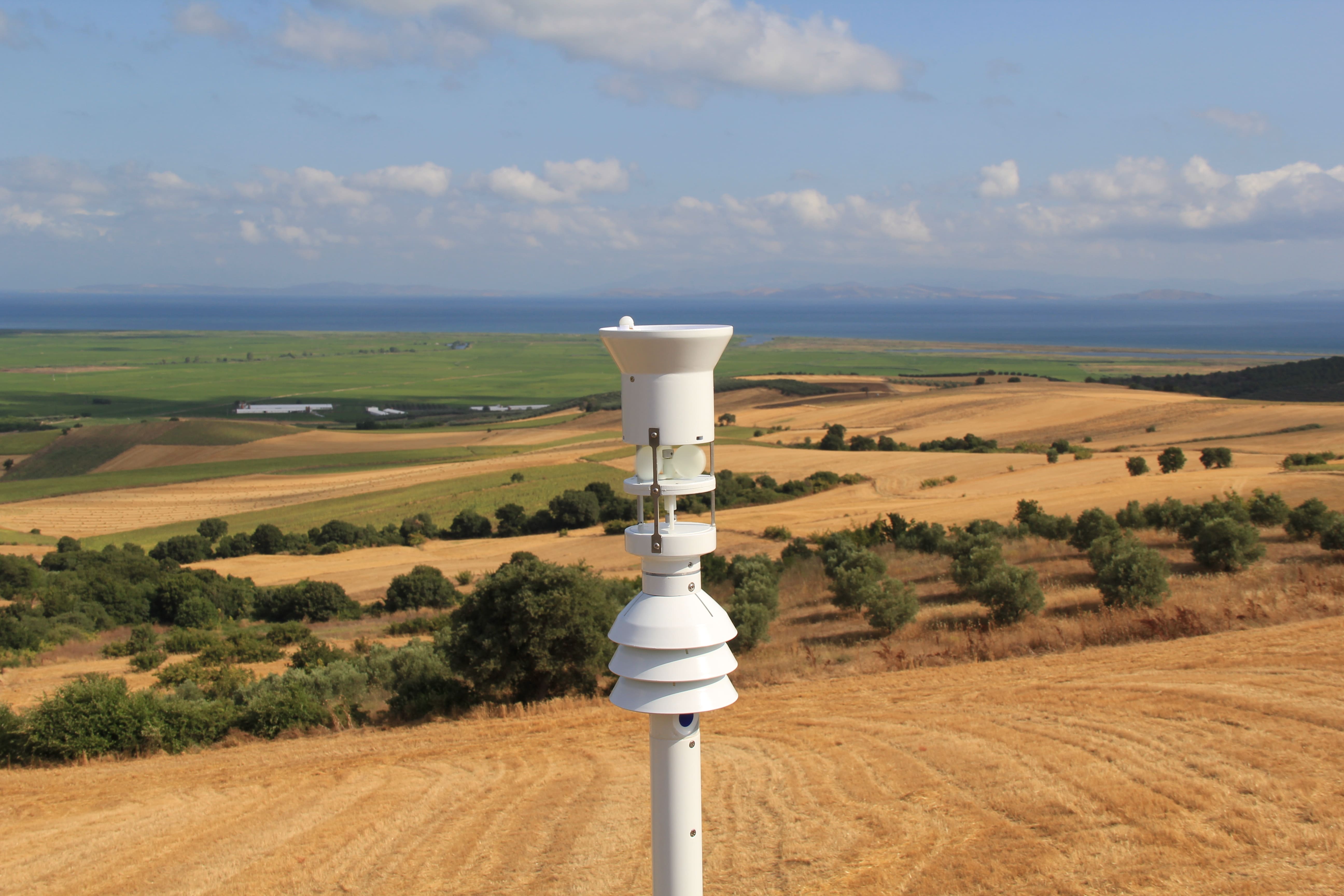
Agriculture touches almost everything: food, water, land, climate, livelihoods and the supply chains that connect farms to households around the world. Yet for all its scale, it remains one of the least digitised sectors of the global economy. That gap is becoming a compliance and credibility risk . Food companies need verifiable supply chain data , farmers need actionable insights they can act on, and regulators increasingly expect sustainability claims to be backed by auditable evidence.
In conversation with Doktar Technologies, the answer comes back to one principle: integration. Founded in 2017 and headquartered in the Netherlands, the company has built end-to-end digital agriculture infrastructure across more than 30 countries, bringing together field hardware, AI-driven analytics, agronomic expertise and sustainability monitoring. What follows is Doktar’s view on why agriculture now requires evidence that can move from the field to the boardroom without losing its integrity. We sat down with their leadership team to discuss how they are bridging this critical gap.
What problem does Doktar Technologies solve?
Agriculture is not short of data. On the contrary, it generates substantial data volumes. The problem is that too much of it is disconnected. A farm may have satellite information, sensors, advisory support or sustainability reporting, but these often sit in isolated systems. When that happens, data can be collected and analysed without actually helping the farmer decide what to do next. For us, the task is to close that gap. We need every agronomic decision to be based on information and optimisation, because better decisions in the field lead to a healthier, more sustainable and more productive food system. In practice, that means turning field-level measurements into decisions farmers can act on, and into verified outcomes for companies that depend on agricultural supply chains.
How does that work in practice?
Every program begins with a basin-level assessment aligned with our water stewardship framework. Before going into the field, we use satellite-based remote sensing to understand shared water challenges, basin-level risks and local agricultural conditions.
From there, we establish a farm-level baseline. That means collecting data on soil health, water dynamics, pest pressure and existing farming practices, so there is a clear starting point against which progress can be measured. The programme is then shaped around the client’s specific objective, whether that is water replenishment, supply chain carbon reduction or pesticide use optimisation.
What differentiates Doktar Technologies’ approach?
What sets Doktar apart is not any single technology, but the way the whole system is connected. We do not offer isolated hardware, software or advisory services. We manage the complete lifecycle: field instrumentation, digital twins of agricultural operations, farmer engagement, farmer engagement, continuous monitoring and audit-ready sustainability reporting.
That matters because every claim must be traceable. The pipeline runs from the sensor in the soil to the sustainability report on a corporate boardroom table. We also employ our own agronomists, who work directly in the field with farmers. That keeps the work grounded. Recommendations are tested against real conditions, not left as theoretical outputs.
Why is field verification so central to Doktar Technologies’ work?
Because sustainability claims are facing much closer scrutiny. Food and beverage companies are being asked not only to improve water use, carbon performance, soil health or biodiversity, but to prove those improvements with reliable evidence.
This is where measurable accountability becomes central. Every claim we provide is backed by field-level data, every programme outcome is independently verifiable, and every partnership is structured around transparent, quantified results.
Across our work, our programmes have delivered more than 9 billion litres in water savings, 44,000 tonnes of carbon emission reduction, a 19 percent decrease in synthetic pesticide use and an average 24 percent increase in yield among participating farmers. These figures demonstrate sustainability's operational value: reduced resource waste, lower input costs, improved productivity, and verifiable evidence for corporate reporting.
How does Doktar Technologies keep technology grounded in real farming conditions?
We operate at the intersection of agronomy, engineering and sustainability science. Our teams bring together agronomists, data scientists, hardware engineers and sustainability specialists, rather than keeping those disciplines apart. The principle is clear: an AI model is not deployed without agronomic validation, and a field recommendation is not issued without supporting data .
That structure matters because agriculture is too variable for purely desk-based solutions. Soil conditions, microclimate, water stress, pest pressure and farmer behaviour all determine whether a recommendation works. Scientific precision, operational integrity and field-verified results are not abstract principles for us. They are built into reporting workflows and product development cycles.
Where is Doktar Technologies heading next?
We are expanding into high-impact agricultural regions, including Southern Europe, the Gulf and Latin America, while strengthening our capabilities in existing markets. The latest funding round, co-led by the European Circular Bioeconomy Fund and Dutch impact investor Pymwymic, supports geographic expansion and technology platform development. We are also investing heavily in our Sustainability Platform, which consolidates field-level data into structured metrics for corporate clients. As regulations such as the EU Corporate Sustainability Reporting Directive (CSRD) and the European Deforestation Regulation (EUDR) raise expectations around supply chain transparency, verified field-origin data is becoming both a compliance necessity and competitive differentiation.
What does Doktar Technologies’ work suggest about the future of agriculture?
The future of agricultural technology will not be defined by data collection alone. It will depend on whether data can be translated into actionable decisions, whether those decisions can produce measurable outcomes, and whether those outcomes can be verified.
That is the standard we are building around. Closing agriculture’s digital infrastructure gap requires more than sensors or software. It requires hardware that captures accurate field data, AI that turns it into recommendations , agronomists who understand local conditions, and reporting infrastructure strong enough to satisfy corporate and regulatory scrutiny. For any organisation operating in agricultural value chains, the question is no longer simply whether to digitise. It is whether the infrastructure behind the data can hold.
https://www.doktar.com/